Mother Mary is Rated R by Motion Picture Rating (MPA) for some violent content and language.
There’s a scene midway through Mother Mary where Anne Hathaway just stands there — not performing grief, not telegraphing it just standing in the kind of stillness that makes you forget you’re watching a movie. You almost don’t want to breathe. And that, honestly, is the best and most accurate summary I can give you of what David Lowery has made here: a film that works when it stops trying and stumbles the moment it starts explaining itself.
Lowery is one of those filmmakers who genuinely doesn’t care if you’re comfortable. If A Ghost Story bored you into tears or The Green Knight felt like a fever dream with a $30 million budget, then Mother Mary won’t change your mind about him. But if those films found something in you, if you remember that long unbroken shot of Rooney Mara eating pie while a bedsheet just.grieved in the corner then you already know what you’re in for here. You know the pace, you know the silences, and more importantly, you’re probably okay with not getting a clean answer at the end.
The film opens in the middle of an incident rather than explaining it. Mary a pop star, celestially branded, the kind whose name alone carries mystique stepped off a high platform in the middle of a concert. Not tripped. Stepped. Whether it was a jump or something weirder is the question everyone around her seems obsessed with, and the one Mary herself seems least interested in answering. What she’s interested in, or what she can’t escape, is the thing that’s been following her. A presence. Reddish, spectral, arriving at the edges of rooms she thought were empty. So she does what makes strange, oblique sense in the world of this film: she goes to find a dress. Specifically, she goes back to Sam Anselm Michaela Coel the designer she came up with before she became Mother Mary, before the mythology and the distance and the years of not calling.
Highly Recommended: The Serpent’s Skin Parents Guide
What unfolds between these two women is the real film. Not the haunting, not the tour, not the carefully narrated flashback sequences just these two people in a room with too much history and not enough of it actually spoken aloud. Coel is, and I don’t say this lightly, extraordinary. She does that thing that only the truly gifted can pull off: she makes you feel everything Sam is withholding. Every glance that stops just short of warmth. Every moment where she almost opens up and then doesn’t. It’s a masterclass in restraint, and it never once feels calculated. If you’ve watched I May Destroy You, you know Coel can tear a scene apart with almost nothing. Here she does it in a different register quieter, more guarded and somehow that’s even more devastating.
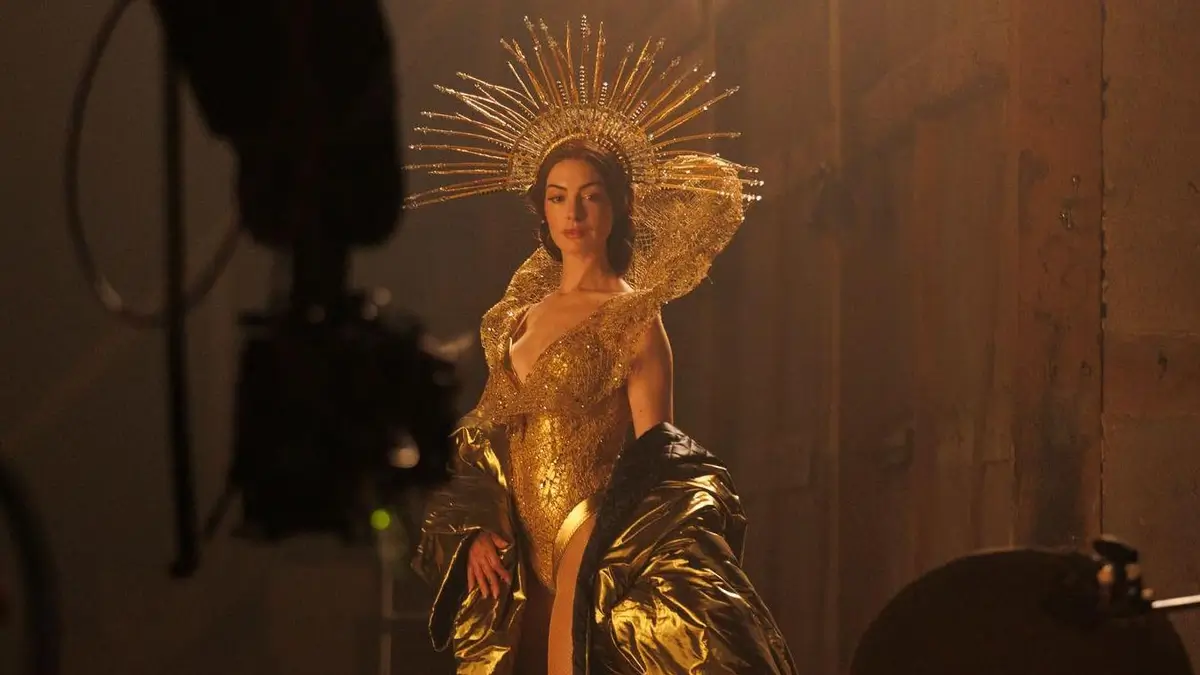
Hathaway holds her own, which is itself a kind of accomplishment given who she’s standing next to. Her Mary is raw in the way real exhaustion is raw not glamorous, not elegantly undone, just genuinely frayed. The panic attacks feel real. The moments where she dances, off-kilter and slightly wrong in the body, stay with you. She’s committed to this woman in a way that goes beyond the role, and you feel it.
The trouble and there is trouble is that the film keeps cycling through the same emotional terrain without quite pushing through it. Mary comes to Sam. Mary breaks open a little. Sam keeps her distance. Sam softens slightly. And then it starts again, like the film is building toward something it keeps deciding it’s not ready to say yet. For a while, that restraint feels purposeful. After a while, it starts to feel like the script running out of new places to take its characters.
The supernatural element compounds this. Lowery treats the crimson apparition that haunts Mary with a studied ambiguity that I suspect he considers a virtue. Is it real? Psychological? Shared between these two women in some way neither of them fully understands? The film refuses to say, and in the early stretches, that refusal feels artistically honest. By the end, though, you can feel the logic getting strained like a piece of fabric pulled too hard in too many directions. The less you interrogate the apparition’s internal rules, the better the film works. The moment you start asking questions, the seams show.
What never frays is the look of the thing. Lowery and his cinematographer turn the film’s cramped, constrained locations into something that breathes. The costuming is extraordinary precise, character-driven work that says things dialogue doesn’t. The darkness is used the way great cinematographers use darkness: not as absence but as weight, as pressure. And the color red, when it intrudes, does what red always does in the right hands it makes you uneasy before you can explain why.
Highly Recommended: Hokum Parent Guide
Mother Mary isn’t a fully realized film. Its bones are slender, and its narrative doesn’t add much to a tradition of haunted women and spectral visitations that cinema has explored before. But it has Michaela Coel in one of the best performances you’ll see this year, and it has the courage of Lowery’s particular, stubborn vision. Sometimes that’s enough. Sometimes you sit in the dark watching Anne Hathaway just stand there, and you think yeah, I’m glad this exists.
Mother Mary Parents Guide
Violence & Intensity: The most confronting moment in the film is the opening incident, where Mary steps off a high platform mid-concert. Lowery doesn’t linger on it gratuitously, but he doesn’t soften it either. You feel the weight of what might have been a suicide attempt without the film ever confirming it. The supernatural apparition that recurring crimson presence is more psychologically unsettling than gory. There’s no bloodshed to speak of, no action-movie brutality. But the film carries a persistent emotional dread that sensitive viewers, younger ones especially, may find more disturbing than a conventional horror film. Intensity here is quiet, accumulated, and harder to shake.
Language: There’s profanity scattered throughout the kind that surfaces naturally in moments of stress or confrontation rather than for shock value. Nothing that would make you flinch in isolation, but the emotional weight of how some of it lands between Mary and Sam gives certain exchanges a sharpness that goes beyond the words themselves. No slurs that registered as notable.
Sexual Content / Nudity: There are moments between Mary and Sam that carry a charged, complicated tenderness old wounds and unresolved closeness but Lowery keeps it restrained. Nothing explicit, nothing that crosses into nudity. The relationship between these two women is layered with history and feeling, but the film expresses that through performance, not exposure.
Drugs, Alcohol & Smoking: No hard drug use that was explicit or prolonged, though the film’s dreamlike quality occasionally blurs the line between supernatural vision and chemically altered perception. Smoking appears briefly.
Age Recommendations: Seventeen and up feels right. For parents considering it for a mature sixteen-year-old, use your judgment, but go in knowing the film’s darkness is psychological and sustained, not momentary.
Highly Recommended: Slanted Parents Guide
