There was a stretch of American history not so long ago when the country seemed unable to look away from the most harrowing stories involving children. The 1990s and early 2000s became a grim procession of names that still carry emotional weight: Jaycee Dugard, JonBenét Ramsey, Polly Klaas, Caylee Anthony, Michelle Knight, Amanda Berry, Gina DeJesus. These were not just cases; they were national obsessions, amplified by the rise of tabloid television and the relentless churn of 24-hour cable news. The coverage often bordered on spectacle. And it was also deeply uneven. As the late, indispensable Gwen Ifill so incisively pointed out when she coined the phrase “Missing White Women Syndrome,” the disappearances and deaths of minority children, teens, and young adults were routinely marginalized or ignored. That truth hangs uncomfortably over any retrospective like this one; you can feel the absence as much as the presence.
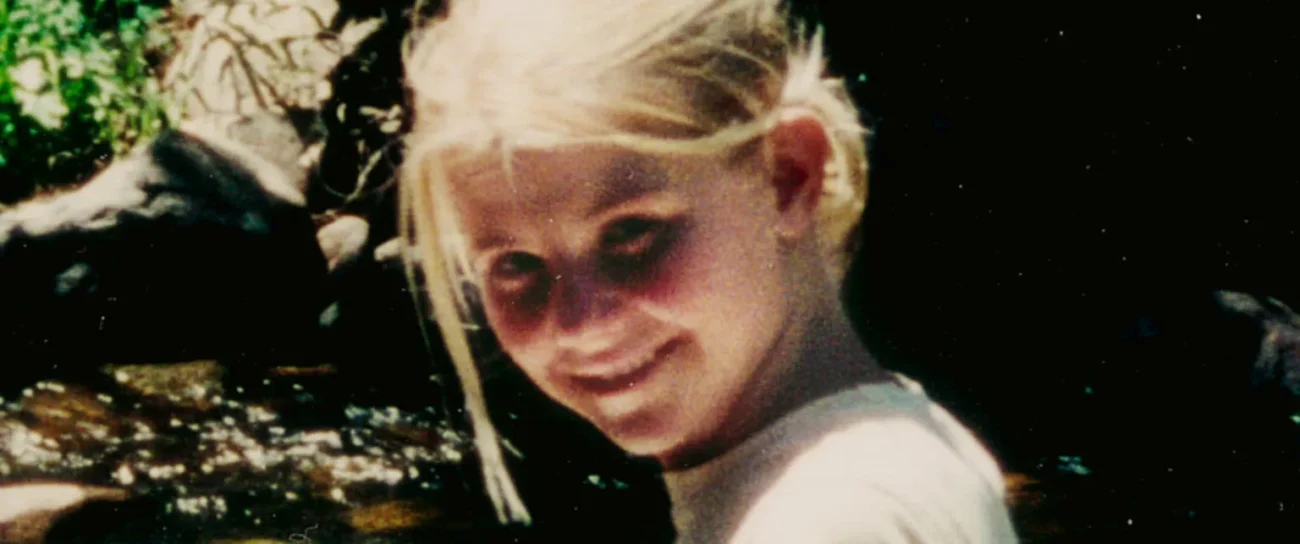
Among those widely publicized cases, the abduction of Elizabeth Smart occupied a particularly haunting place in the national psyche. Her disappearance and later rescue have been chronicled repeatedly in books, documentaries, and made-for-TV films, such as CBS’s “Bringing Elizabeth Home” and Lifetime’s “I Am Elizabeth Smart.” At first glance, Netflix’s “Kidnapped: Elizabeth Smart” might seem like yet another revisit to well-trodden ground. There are no new revelations here; her captors were prosecuted years ago. And yet, under the direction of Benedict Sanderson, the film justifies its existence through rigor and attentiveness. It approaches the story not as a sensational recap, but as a carefully constructed act of journalistic memory, anchored by present-day interviews with Elizabeth herself, her younger sister Mary Katherine, who witnessed the abduction, and her father, Ed Smart. Elizabeth’s mother, Lois, declines to participate, a choice that the film neither sensationalizes nor ignores. It simply leaves the absence there, which somehow makes it heavier.
Highly Recommended: Landman Season 2 Finale Parents Guide
Sanderson is not a minimalist, and the documentary occasionally bears the marks of contemporary true-crime aesthetics. There are moments of visual overstatement: the camera moves in uncomfortably close to faces, as if proximity alone could deepen emotional truth, and the score underlines certain beats with a bluntness that suggests a lack of trust in the material’s inherent power. The film also relies on the familiar toolkit of the genre—911 call audio, interrogation-room footage, home videos, archival broadcasts, and intermittent reenactments. By now, you can almost imagine a parallel acting industry made up entirely of people who specialize in playing “shadowy intruder,” “terrified victim,” or “anonymous figure disappearing into darkness.” These devices don’t ruin the film, but they do occasionally remind you of the machinery behind the storytelling.
Still, when “Kidnapped: Elizabeth Smart” settles into the facts, it becomes quietly gripping. It begins with a stark title card: “In 2002, 14-year-old Elizabeth Smart was abducted from her bedroom as she slept. The only witness was her nine-year-old sister, Katherine.” From there, the film paints a portrait of the Smart family: devout members of the Church of Jesus Christ of Latter-day Saints, raising six children in a large home tucked into the foothills of Salt Lake City’s affluent Federal Heights. It’s the kind of setting that, in retrospect, feels painfully symbolic safe, orderly, insulated. That illusion collapses on the night of June 5, 2002, when a man slips into the bedroom Elizabeth shares with Mary Katherine. Mary Katherine’s memory of that moment is devastating in its simplicity. She recalls the intruder warning Elizabeth that if she screamed, he would kill her. “I was paralyzed,” she says. “I just couldn’t believe what was happening.” There’s no artifice in that memory. It lands with a chill that no score or camera trick could manufacture.
Highly Recommended: Agatha Christie’s Seven Dials (2026) Parents Guide
Perhaps most unsettling is Mary Katherine’s insistence that she recognized the voice of the man who took her sister. That detail sends the investigation and the public narrative down a familiar and troubling path: suspicion aimed inward, toward the family. You can sense how quickly doubt takes root when a crime defies easy explanation. Nicea DeGering, a reporter who covered the case, admits on camera that she found herself wondering whether this was a “real kidnapping.” That candid confession is one of the documentary’s most revealing moments, because it exposes how even experienced journalists are not immune to the gravitational pull of skepticism.
As the search intensifies neighbors canvassing the area, national media descending on Salt Lake City, tens of thousands of tips flooding in law enforcement scrutiny begins to settle on Ed Smart. Listening to him describe that experience is quietly agonizing. “To have your daughter go missing is horrendous,” he says. “And then to be a possible suspect I was beyond words.” His brother Tom, offering comments about a supposed family tendency toward “monomaniacal behavior,” only deepens the cloud of suspicion. Eventually, investigators fixate on Richard Ricci, a man with a violent criminal history who had done a day’s handyman work in the Smart home. It’s a familiar tragedy within a tragedy: the system’s need for a suspect becomes more powerful than its commitment to certainty.
But Mary Katherine never wavered. She knew the voice she heard that night did not belong to Ricci. And she was right. Elizabeth had been taken by Brian David Mitchell, a delusional, self-styled prophet whose rhetoric of divine mission barely conceals the reality of his brutality. Along with his wife, Wanda Barzee, Mitchell kept Elizabeth hidden in a tent in the woods, subjecting her to relentless sexual violence, psychological manipulation, and threats of death. The documentary does not linger on these details gratuitously, but it does not soften them either. Nor should it. The horror is part of the truth.
Highly Recommended: The Night Manager Season 2 Parents Guide
About forty minutes into the film, Sanderson makes a structural choice that changes the emotional temperature of the documentary. The timeline resets. We go back to the beginning again, but this time through Elizabeth’s eyes. There’s an almost self-conscious behind-the-scenes moment as the crew prepares to interview her, the director’s voice asking, “Shall we begin?” It’s a small break in the fourth wall, perhaps unnecessary, but it does underscore the gravity of what follows. Elizabeth recalls waking to a voice telling her, “I have a knife at your neck. Don’t make a sound.” From there, her testimony becomes the emotional spine of the film. We witness the endless calculations of survival, the moments when escape seemed almost possible, the paralyzing fear that kept her silent even when surrounded by people who might have helped. Watching these scenes unfold, it’s hard not to think about how casually society judges victims for what they “should have done,” as if courage were a simple switch one could flip in the middle of trauma.
The story’s climax the moment of recognition when police encounter Elizabeth in public with Mitchell and Barzee and ask if she is Elizabeth Smart still carries a strange, fragile power. Her reply, “Thou sayeth,” is both chilling and heartbreaking, a glimpse of how deeply Mitchell’s language and control had infiltrated her sense of self.
Today, Elizabeth Smart is a wife and mother of three, and the documentary does not frame that fact as a tidy remember, but as part of a larger narrative of endurance. She has become a prominent advocate for survivors of sexual violence and abduction, using her platform not to inspire in a hollow, motivational-poster way, but to speak with specificity about shame, resilience, and the slow work of self-reclamation. When she says she wanted other survivors to know they had nothing to be ashamed of, that they were not alone, you can hear the lived experience behind the words. Her admission that her internal dialogue has shifted from self-blame to self-encouragement is one of the film’s most quietly radical moments. This is not the language of triumph imposed by a documentary; it’s the voice of someone who has fought for every inch of psychological ground.
Highly Recommended: The Pitt Season 2 Parents Guide
In the end, “Kidnapped: Elizabeth Smart” does not pretend to be a reinvention of the true-crime documentary. It carries some of the genre’s familiar excesses, and Sanderson occasionally over-directs where simplicity would suffice. But what lingers is not the technique. What lingers is Elizabeth herself: articulate, unsentimental, and deeply aware of the complexity of survival. She emerges not as a symbol, not as a case study, but as the author of her own ongoing story. And that, more than any dramatic flourish, is what gives the film its lasting weight.
Kidnapped: Elizabeth Smart Parents Guide (TV-MA)
Violence & Intensity
This documentary deals with profoundly disturbing real-life events, and the emotional intensity is sustained throughout. The abduction itself is described in detail through firsthand testimony, including a man threatening a child with a knife and the terror of being taken from her bed. There are no graphic visual depictions of violence, but the psychological weight is heavy: prolonged captivity, coercion, fear, and trauma are central to the narrative. Audio from 911 calls, police footage, and tense recollections create an atmosphere that can feel suffocating at times. You don’t see gore, but you absolutely feel the trauma.
Language (Profanity, Slurs, Tone): Strong language is minimal, but the tone is consistently serious, somber, and emotionally raw. Some interviewees use mild profanity in moments of distress or reflection. The language overall is respectful and journalistic rather than sensational, though the subject matter itself may be upsetting regardless of word choice.
Sexual Content / Nudity: There is no nudity or explicit sexual imagery. However, sexual violence is a core part of the story. Elizabeth speaks about being raped by her captor, and the documentary addresses sexual abuse directly, though without graphic detail. These discussions are handled with restraint and dignity, but they are unavoidable and emotionally heavy. For many viewers, this will be the most difficult aspect of the film.
Drugs, Alcohol & Smoking: There is little to no focus on substance use. This is not a thematic element of the documentary, and parents are unlikely to find concerning content in this area.
Age Recommendations
While the TV-MA rating is appropriate, this is not “mature” in a sensational sense; it is mature in a human sense. The themes of abduction, sexual assault, trauma, and survival are deeply complex and emotionally demanding. This documentary is best suited for older teenagers (16+) and adults who can handle complex subject matter with support and context.
