Long before The Last of Us and Sonic the Hedgehog helped prove that video game adaptations could actually be good, the genre was a chaotic graveyard of misfires punctuated by the occasional sincere effort. Somewhere in that uneven era sat Christophe Gans’ Silent Hill (2006): an overstuffed, lore-heavy film that tried to juggle too much mythology at once, yet still managed to show real affection for its source and an impressive eye for atmosphere.
That’s what makes Return to Silent Hill such a perplexing experience. Gans, returning alongside writers Sandra Vo-Anh and Will Schneider, clearly set out to craft a faithful adaptation of Silent Hill 2, arguably the crown jewel of the franchise. But despite flashes of brilliance, stunning visuals, eerily accurate creature designs, and moments that genuinely capture the game’s mood, the film repeatedly trips over its own choices. The result is a frustrating blend of inspired recreation and baffling misjudgment.
This time, Gans finally tackles Silent Hill 2 head-on. The story follows James Sunderland, a man hollowed out by grief after his wife Mary dies from a long illness. Then, impossibly, he receives a letter from her, inviting him back to Silent Hill, the place they once cherished together. Drawn by equal parts hope and guilt, James enters the town only to find it abandoned, smothered in fog, and crawling with things that should not exist.
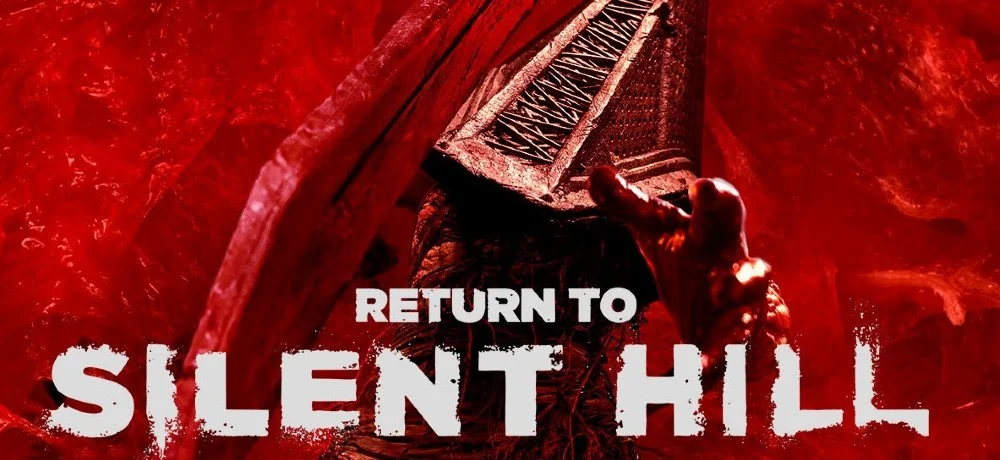
As he wanders deeper into Silent Hill, he encounters others who seem just as lost: Angela, a fragile young woman searching for her mother; Eddie, whose hostility hints at deeper instability; Laura, a sharp-tongued orphan who claims to have known Mary; and Maria, a woman who looks uncannily like Mary but behaves like her distorted opposite confident, flirtatious, and unsettling. Around them, the town shifts between its ashen, deserted facade and a corroded nightmare world of rust, blood, and decay. Monsters stalk the streets: grotesque insectile things, twisted humanoids, and of course Pyramid Head, looming like an embodiment of judgment itself.
On a purely visual level, Gans once again proves he understands what Silent Hill should feel like. The creatures look phenomenal, whether achieved through practical effects, CGI, or a blend of both and they appear ripped straight from the game’s art direction. There’s a tactile, handcrafted quality to them that creates the same low-level dread players felt while navigating the game’s oppressive environments. Even the heavier use of CGI doesn’t become the distraction one might expect. In fact, one late-film creature is so intricately realized that it’s a genuine surprise to learn how much of it was practical, with digital effects simply enhancing its presence rather than replacing it.
But visual fidelity only carries a film so far, and this is where Return to Silent Hill begins to unravel. Gans repeats one of his biggest missteps from the 2006 film: an obsession with overexplaining the town’s mythology. In the earlier movie, this impulse was somewhat understandable. That film loosely adapted the first game while borrowing from multiple sequels, so there was at least some narrative justification for foregrounding The Order, the cult whose twisted beliefs contributed to Silent Hill’s downfall.
Silent Hill 2, however, deliberately moved away from cult mythology. Its power lies in its psychological focus. The horrors James encounters are not random monsters; they are reflections of his guilt, shame, repression, and unresolved feelings toward Mary. The creatures are metaphors. The nurses, for example, represent James’ conflicted sexual thoughts about the hospital staff who cared for his wife. The town isn’t just haunte,d it’s therapeutic in the cruelest possible way, forcing its visitors to confront what they most want to avoid.
Instead of trusting that core, Gans chooses to reinsert the cult into the narrative, and it’s one of the film’s most damaging decisions. The script invents a new backstory tying Mary to the cult, a change that feels both unnecessary and emotionally corrosive. Rather than deepening the tragedy, it dilutes it. In the game, the heartbreak of James and Mary’s relationship comes from its intimacy: love warped by illness, resentment, guilt, and grief. The tragedy is painfully human. Here, Mary’s supposed ties to the cult reframe her fate as something partially external, even conspiratorial, which undercuts the personal weight that should drive the story.
Worse, the film suggests that this connection contributed to the prolonged conflict between James and Mary during her illness, weakening the emotional foundation of James’ journey. His quest is meant to be fueled by love so powerful that it survives death, tangled with the guilt of how he handled the end. By altering that dynamic, the film erodes the very themes it claims to honor.
The damage doesn’t stop there. In the game, Angela, Eddie, and Laura aren’t just supporting characters orbiting James; they are essential mirrors, each confronting their own trauma through Silent Hill’s nightmarish logic. Their stories are harrowing, personal, and deeply meaningful. The town responds to them individually, shaping horrors that reflect their inner wounds.
Return to Silent Hill strips much of that away. The film becomes so fixated on centering everything around James that these characters lose their narrative power. Angela and Eddie are reduced to underdeveloped figures, their arcs flattened to the point of near irrelevance. Laura’s connection to Mary remains mostly intact, but the film can’t resist adding a late twist and inserting gratuitous monster tension into her scenes. In doing so, it betrays one of the most important aspects of her character: that she is meant to be the only truly innocent soul in the story.
All of this makes the moments the film does get right feel especially painful. There are scenes particularly those involving Maria and her evolving dynamic with James that genuinely echo the game’s psychological complexity. James’ gradual realization of what Silent Hill actually represents, and what it demands of him, hints at a deeper understanding of the material. For brief stretches, the movie feels like it might fully grasp the emotional and thematic core of Silent Hill 2. It just never commits to that understanding with consistency.
The cast only heightens the sense of missed potential. Jeremy Irvine’s James leans more manic than some fans might expect, but he effectively conveys the character’s grief and simmering self-loathing. Hannah Emily Anderson is especially impressive, navigating the delicate duality of Mary and Maria with real emotional intelligence. Their performances suggest a better film struggling to escape the confines of its own script.
By the end, the question lingers: who exactly is this adaptation for? It isn’t fully accessible to newcomers, burdened as it is with lore tangents and convoluted additions. Yet it also alienates longtime fans by misunderstanding or outright undermining the very themes that made Silent Hill 2 so beloved.
Return to Silent Hill arrives in theaters Friday, a film caught between reverence and revision, never quite reconciling the two.
Violence & Intensity:
The film features bursts of action, including gunfire, fistfights, and nerve-wracking chase scenes that stretch from rooftops to high-speed pursuits on hoverbikes. Characters live under the constant threat of being executed by an A.I.-controlled justice system, which hangs over the story like a dark cloud and sustains a deep sense of unease. Blood is visible in the aftermath of violent moments, though the movie stops short of graphic gore. What truly weighs on the viewer is the emotional strain: fear, urgency, and mounting psychological pressure dominate the atmosphere, and the notion of a machine holding the power of life and death is especially disturbing, potentially so for younger teens.
Language:
Profanity surfaces throughout the film, with occasional use of stronger words such as the F-word and S-word. The dialogue often feels sharp-edged and confrontational, particularly when tensions run high. There’s no persistent use of slurs, but the speech reflects the characters’ frayed nerves and the harshness of the world they inhabit.
Sexual Content / Nudity:
The story touches on a troubled marriage and the emotional closeness between partners, but it never ventures into explicit territory. There are no sexual scenes and no nudity. The relationship elements are portrayed with a somber, reflective tone rather than anything romanticized or sensual.
Drugs, Alcohol & Smoking:
Addiction plays a meaningful role in the narrative. The protagonist’s struggle with sobriety is central, with relapse suggested rather than shown outright. Alcohol appears on screen and in conversation, alongside themes of guilt, recovery, and the difficulty of staying clean. There’s a brief instance of teen smoking. None of this is glamorized, but it carries real emotional weight.
Age Recommendations: Although the film carries a PG-13 rating, its subject matter feels more appropriate for older teens (around 15+) and adults. Younger viewers may struggle with or be unsettled by the heavy themes of constant surveillance, state-sanctioned execution, addiction, and sustained psychological tension, which demand a certain maturity to process.
Release Date: January 23, 2026
Runtime: 106 minutes
Director: Christophe Gans
Writers: Sandra Vo-Anh, William Josef Schneider, Christophe Gans
Producers: Victor Hadida, John Jencks, Molly Hassell, Alexa Seligman, David
