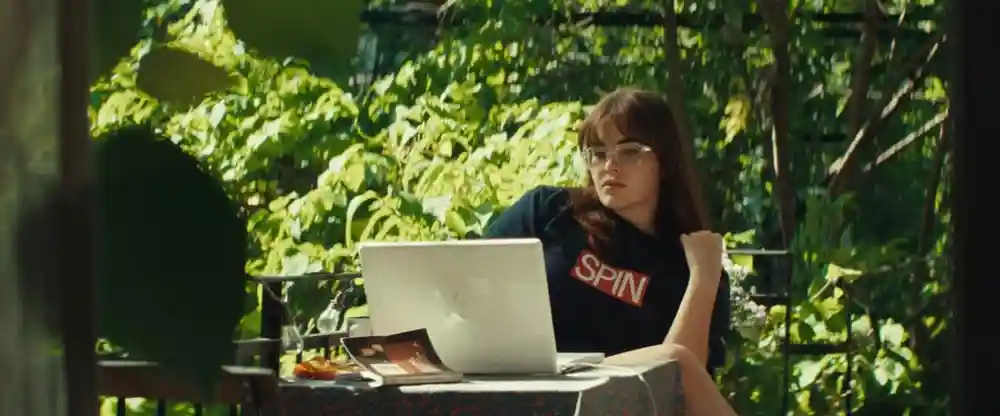
I almost turned off “Mile End Kicks” twenty minutes in.
Not because it’s bad. Because Grace was making me crazy. She gets this book deal , a real one, from an actual publisher, to write about “Jagged Little Pill”, and then she just… doesn’t do it. She goes to shows. She hooks up with the wrong guy. She lets emails sit there unread while she stares at her ceiling. And I’m sitting there thinking, do you have any idea how many people would kill for that chance?
Then I remembered: I was her.
Not the book deal part. But the part where an opportunity lands in your lap and you suddenly become convinced you’re going to fail, so you might as well start failing now, on your own terms, before the universe does it for you. The part where you blow off the thing that matters because the thing that matters is terrifying, and checking your phone is easier. The part where you tell everyone you’re writing a book and then spend three weeks reorganizing your furniture.
So yeah. She made me crazy. And then she made me recognize myself.
Chandler Levack, who used to be a journalist before she became a filmmaker, wrote and directed this. And you can feel it in every scene, the way the camera lingers on the notebooks, the way Grace’s hand hovers over a keyboard before typing anything, the way she introduces herself as a writer even though she hasn’t finished anything in months. Levack isn’t guessing what this feels like. She lived it.
The movie drops us in Montreal’s indie scene, circa 2011 or so. Grace has just fled a terrible job — her boss, played by Jay Baruchel with a quiet, almost casual cruelty, is the kind of man who says “I’m just being honest” when he’s actually just being mean. She finds an apartment on Craigslist. Her roommate Madeleine is cool in that effortless way that makes you both adore and resent her. And Grace decides she’s going to write a book about Alanis Morissette.
Recommended: Mother Mary Parents Guide
Not a tell-all. Not a best-of listicle disguised as criticism. A real book about what “Jagged Little Pill” meant, how it was the first time a young woman got to be furious in public and got rewarded instead of punished. How that album told an entire generation of girls that their anger wasn’t something to hide.
Barbie Ferreira plays Grace like someone holding a coffee cup that’s too hot. She’s warm and funny and you want to be around her, but there’s a tension underneath, a constant low-grade panic that she’s about to be found out. There’s a scene where she’s on the phone with her publisher, and she’s lying about how far along she is, and Ferreira’s face does this thing, the smile doesn’t reach her eyes, and her free hand is tapping against her thigh, and you realize she’s not being lazy. She’s terrified.
Here’s what the movie gets right that most movies get wrong: Grace’s self-sabotage isn’t glamorous. It’s not sexy or tragic or romantic. It’s just dumb. She sleeps with two guys from the same band, which is objectively a bad idea. She misses deadlines for no good reason. She lets Madeleine carry her financially for way longer than she should. And the movie doesn’t give her an easy out. No big speech where she suddenly sees the light. No montage where she locks herself in a room and types furiously and emerges a new woman.
She just… keeps going. Keeps failing. Keeps trying again. Like a real person.
I’ve seen some people say Grace is frustrating to watch. And she is. But I think that’s the point. Frustration is what happens when you care about someone who keeps getting in her own way. And Levack cares about Grace, the movie never judges her, even when it shows you exactly how she’s messing up. That’s harder than it sounds. Most filmmakers would either sand down the rough edges or make her a cautionary tale. Levack does neither.
The Alanis thing isn’t just a gimmick, by the way. It’s the spine of the movie. Grace keeps going back to that album, playing it in her headphones, scribbling notes about it, because she’s trying to figure out how Morissette got to be so loud without apologizing. And the movie understands that this isn’t just about music criticism. It’s about whether you’re allowed to take up space. Whether you’re allowed to want things. Whether you’re allowed to be angry and still be loved.
I don’t think “Mile End Kicks” is a masterpiece. It meanders in the middle. A few scenes feel like they’re treading water. And I’m not sure it fully earns its ending, which wraps things up a little too neatly for a movie that spent most of its runtime celebrating mess.
But I’ve been thinking about it for three days. That has to count for something.
I’ve been thinking about the moment where Grace finally writes a sentence she doesn’t immediately delete. The way her face changes , not joy, exactly. More like relief. Like she forgot she was allowed to do that.
I’ve been thinking about my own twenties. The book I told everyone I was writing. The one I never finished. The way I still introduce myself as a writer, even on days I don’t write a thing.
I don’t know if Grace finishes her book. The movie suggests she does, but that’s not really the point. The point is that she keeps trying. Even when it’s humiliating. Even when she’s scared. Even when there’s no one in the room telling her she’s good enough.
Sexual Content / Nudity: This is the big one. Grace has sex in this movie. More than once. With more than one person. And Levack shoots it the way intimacy should be shot, not like pornography, not like a music video, but like two people fumbling around in a bedroom. There’s a scene early on where Grace hooks up with a guy she just met at a show. You see bare breasts. You see her on top of him. It’s not graphic in the way an NC-17 movie would be, but it’s unmistakable. Later, she sleeps with a different guy, and the movie makes a point of showing her waking up in his bed, pulling on her clothes, looking at herself in the mirror. There’s also a conversation about good sex versus bad sex, Madeleine gives Grace some very direct, very explicit advice about what to ask for in bed. Nothing is shown during that conversation, but the language is adult. Think “Girls” on HBO, not “Pretty Woman.”
Drugs, Alcohol & Smoking: This movie takes place in Montreal’s indie music scene in the early 2010s. So yes. There’s drinking at every show, every bar, every apartment hang. Nobody gets falling-down drunk, but people are constantly holding beers or red cups. The bigger concern is weed. Grace smokes weed repeatedly, at concerts, on her apartment balcony, in a park with her roommate. It’s treated casually, the way people in their twenties actually treat it. No one lectures her about it. No one faces consequences for it. There’s also a scene where someone passes around a joint at a house party, and a few background characters might be doing other things, but the camera doesn’t focus on it. No hard drugs. No needles. No coke lines.
Language: This is a movie about a music critic who’s angry and a roommate who doesn’t mince words. So the f-word shows up maybe twenty or thirty times. “Shit” constantly. “Bitch” a few times, usually in arguments. No racial slurs. No homophobic language. But the tone of the language matters more than the specific words, there’s a scene where Grace’s old boss (Jay Baruchel) says something casually degrading to her, and it stings more than any swear word could. The movie earns its R rating here not through volume but through intent. These characters talk like adults who are frustrated with their lives.
Violence & Intensity: Almost none. This surprised me, given how angry the movie is underneath. There’s no physical fighting. No guns. No blood. The closest thing to violence is a moment where Grace shoves a guy’s hand off her shoulder, he’s being pushy at a bar, and she’s had enough. That’s it. The intensity is all emotional. Arguments between roommates. A shouting match with a publisher over the phone. The lingering dread of an exploitative boss who never hits anyone but makes your skin crawl anyway. For a parent worried about graphic violence, you can breathe easy. For a parent worried about psychological tension, pay attention.
Age Recommendation: Here’s where I have to be honest with you. The MPAA gave it an R for a reason. A fifteen-year-old could sit through this and not be traumatized — there’s nothing that graphic, nothing that cruel. But would they understand it? That’s a different question. The movie is about the specific kind of self-sabotage that comes from not believing you deserve success. It’s about casual sex that’s not traumatic but also not romantic. It’s about weed as a background texture, not a rebellion. A mature sixteen-year-old who’s seen a few R-rated dramas would probably be fine.
