I’ll be honest with you. I almost didn’t watch this season.
Not because Sweet Magnolias is bad it isn’t but because four seasons in, I had started to feel like the show was going in circles. Maddie cries. Helen carries everybody, Dana Sue yells at something in her kitchen, and Bill Townsend shows up and ruins a perfectly good episode. The margaritas flow.
But something is different this year. I noticed it somewhere around the third episode, when I realized I hadn’t checked my phone in a while. That doesn’t sound like much, but for a comfort drama that’s spent years being almost great, it’s actually significant.
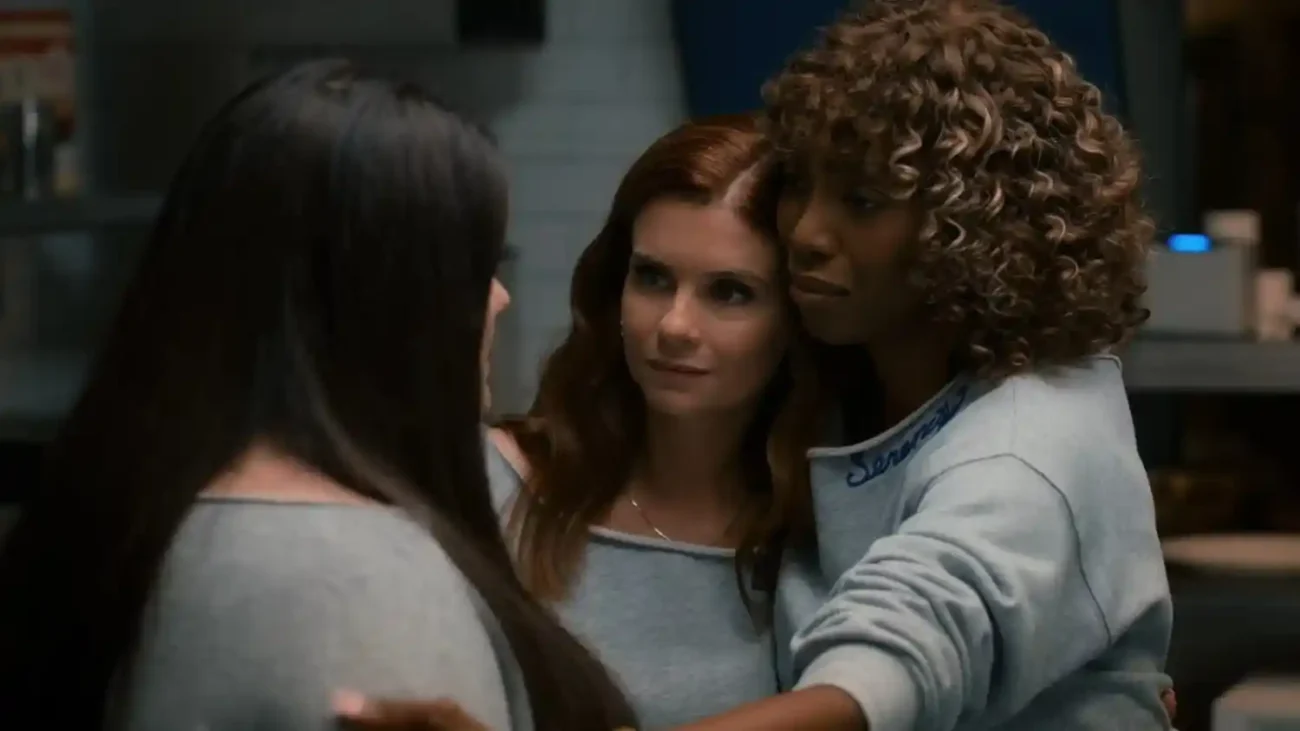
The season opens in New York, of all places. Maddie has moved there, chasing a career in publishing, of all the unexpected pivots for a former sports manager and spa co-owner and her best friends fly in for a long weekend. Helen, Dana Sue, margaritas in a Manhattan apartment, a visit to a wedding dress boutique, a detour through Central Park.
It’s a brief stretch, maybe forty-five minutes of screen time across the premiere, but it’s some of the loosest, most relaxed television this show has ever made. JoAnna Garcia Swisher, Heather Headley, and Brooke Elliott have spent five years building some
thing together, and you can feel every season of it in how they move through those New York scenes laughing at the wrong moments, talking over each other, comfortable in the specific way that only old friends are comfortable. The city doesn’t transform them or challenge them philosophically. It just gives them room to exist outside Serenity for a minute, and the show is smart enough to let that be enough.
What the show has shed this season and I cannot overstate how much lighter the whole thing feels for it is Bill Townsend. Chris Klein was never given anything interesting to do with that character. For four seasons, Bill existed as a walking consequence, a human plot device dressed in khakis, and every scene he appeared in had the same function: to remind Maddie, and by extension us, of a mistake she already knew she’d made. Getting him out of the center of the story isn’t just a relief. It opens up space that the show rushes to fill in genuinely surprising ways.
Maddie gets to want something new. That’s not as small a thing as it sounds. Watching her navigate the publishing world, the romance genre specifically, which the show treats with affection rather than condescension gives Garcia Swisher material that doesn’t require her to react to a man behaving badly. She gets to just be ambitious. It suits her.
The season’s best storyline belongs to Helen and Erik, and it belongs to Heather Headley in particular.
Erik (Dion Johnstone) has functioned in previous seasons as something approaching a romantic fantasy, the man who drove through a literal hurricane, who carried Helen out of a hospital, who appeared at the exact right moment in every crisis. The show has always known this about him. It’s why a throwaway callback in season four, where Helen recaps the hurricane rescue to someone who hadn’t heard the story, lands as one of the funniest and most self-aware moments in the series. The show was winking at us. We know. He’s absurdly good.
Season five stops winking and starts complicating. Erik’s family history, which I won’t detail here, starts seeping into his wedding plans with Helen, and then into their trust, and then into the corners of their relationship where the show usually keeps the lights off. What’s remarkable is that the season doesn’t turn him into a villain for this.
He doesn’t cheat, doesn’t lie in any devastating way, doesn’t pull some dramatic reversal. He just fails, in small and very human ways, to protect something fragile enough to break quietly. Headley plays Helen’s response to this with a precision that borders on painful.
There’s a scene, Helen alone, not crying, just thinking that she carries entirely on the stillness of her face. No music swells. The camera doesn’t move. You just watch a woman recalculate, and it’s one of the best minutes of acting the show has produced in five seasons.
Dana Sue and Ronnie hit turbulence again this year, and I’ll admit the first two episodes of their storyline made me groan a little. After a season three vow renewal that felt genuinely earned, reopening that wound seemed like the writers’ instinct kicking in happy couple equals boring couple, so let’s manufacture a problem. But the show earns it back.
What develops isn’t infidelity or betrayal in any conventional sense. It’s the slower, quieter damage of living with someone whose relationship to risk and impulse never fully stabilized. Ronnie’s addictive tendencies, how they shape his judgment in business, how they put pressure on his marriage and his friendship with Annie give the season something that Sweet Magnolias rarely attempts: an honest look at how good people can hurt the people closest to them through patterns rather than choices. Brooke Elliott makes sure you feel that distinction. She always does.
The younger cast has never been the show’s strong suit, and I won’t pretend they’ve suddenly become the reason to watch. But season five uses them better. Kyle’s involvement in the town play leads somewhere genuinely affecting a decision about his future that actually follows from who he’s been for five seasons, not from where the plot needed him to go. Isaac’s new relationship has a tentative warmth to it, the specific sweetness of someone experiencing something real for the first time and not quite knowing what to do with their hands. Annie, leaving for California, doesn’t get a tidy resolution. She leaves uncertain, and the show lets her.
Here’s what I didn’t expect to find in a fifth season of a Netflix comfort drama: something worth caring about thematically.
All three women end up, in different ways, fighting for the arts. Maddie in publishing, specifically the romance genre, which the show refuses to treat as a punchline. Dana Sue through food, which has always been her language anyway. Helen trying to drag the town’s Art Guild back to life through sheer force of will, which is also just Helen being Helen. It could have felt like a tidy writers’ room decision, give them a shared mission, keep the ensemble cohesive and honestly, in the first couple of episodes, it does feel a little like that. But somewhere around episode six, I stopped thinking about it as a structural choice and started feeling it as a conviction. These women are arguing, in their small-town way, for the right of ordinary people to make things that don’t have a monetizable outcome.
In 2026, with generative AI eating the creative industries from the bottom up, that argument lands differently than it would have even two years ago. I don’t think the show is explicitly engaging with that moment, Sweet Magnolias is not a zeitgeist show but it’s accidentally arrived at something real anyway. Sometimes that’s better.
But I finished season five wanting more, which is not something I can say without qualification about seasons three or four. This show has spent five years being comfort television. Somewhere in this season, it figured out how to be good television at the same time. Those two things coexist more naturally than you’d expect.
Parental Guidance
TV-14 | Netflix
Violence & Intensity: None, essentially. The show’s conflicts are entirely emotional arguments, relationship strain, difficult conversations. The closest thing to intensity is a storyline dealing with addictive behavior and its consequences, handled with care and without dramatization. No action, no physical confrontation.
Language: Mild throughout. The Southern small-town setting keeps things relatively restrained. Occasional mild profanity, nothing heavy, nothing targeted. No slurs.
Sexual Content / Nudity: A handful of scenes between Helen and Erik carry some heat more than the show has typically allowed itself, but nothing explicit. The camera is tasteful. Romance in Sweet Magnolias is fundamentally about emotional intimacy, and that orientation hasn’t changed. No nudity.
Drugs, Alcohol & Smoking: Social drinking is woven into the show’s DNA, the margarita is practically a recurring character. More substantively, a major storyline this season is built around one character’s addictive tendencies and how those patterns damage his relationships. The treatment is honest and non-glamorizing. No illegal drug use. No smoking.
