The Chronology of Water is Best suited for mature teens and adults, 17+, who can process heavy emotional themes and complex storytelling. Not appropriate for children or younger teens.
Ever wonder what it’s like to live a life so intense, chaotic, and heartbreakingly beautiful that it almost can’t be captured on screen? The Chronology of Water, Kristen Stewart’s directorial debut, tries and in many ways, succeeds at doing exactly that. This isn’t your typical linear story; it’s a dive into memory, trauma, love, and art, all splashed across the screen like water itself—sometimes calm, sometimes crashing.
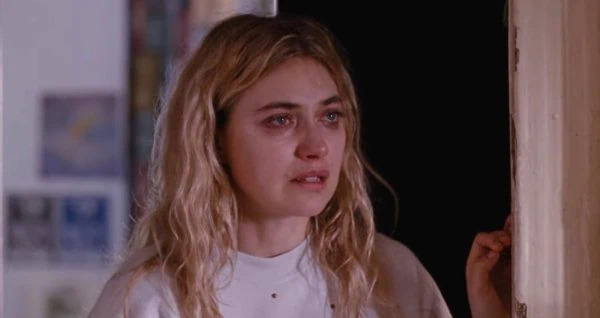
In the film, we follow Lidia Yuknavitch (played with raw fearlessness by Imogen Poots), an aspiring swimmer growing up in a broken home dominated by an abusive father. Left alone after her mother’s overdose and her sister’s escape, Lidia’s world is a swirl of loss, confusion, and yearning for agency. But this isn’t a story that forces the trauma onto you in a conventional “here’s the tragedy” way. Instead, Stewart captures memory as it feels fragmented, hazy, and sometimes brutally intense turning the film into a kaleidoscopic journey through Lidia’s life.
The movie’s mood is hypnotic and experimental. Cinematographer Corey C. Waters crafts a grainy 16mm texture that makes every frame feel like a half-remembered dream, while editor Olivia Neergaard-Holm slices and overlays images with precision, creating a controlled chaos that mirrors the way memories collide. Paris Hurley’s score floats between quiet reflection and sudden, almost jarring bursts, perfectly accentuating the highs and lows of Lidia’s experiences. Watching it can feel like standing in a river of someone else’s life sometimes gentle, sometimes violent, but always immersive.
The story unfolds in five chapters, each exploring a key point or relationship in Lidia’s life: battles with addiction, volatile love affairs, mentorships, sexual discovery, and moments of both despair and joy. Stewart’s technique of layering these memories allows Poots to deliver an emotionally complex performance, where heartbreak and elation often exist side by side in the same scene. The film is unafraid of being raw and corporeal; water, blood, sweat, and tears aren’t just metaphors here they’re part of the visceral storytelling.
One of the most striking things about The Chronology of Water is its handling of trauma. Stewart doesn’t sensationalize abuse or loss; instead, she captures how memories themselves can feel lost, hazy, and intertwined. Even moments of happiness carry a shadow of sadness, a subtle reminder that life isn’t neatly segmented. And yet, there’s beauty in that chaos. The poetic narration drawn from Lidia Yuknavitch’s own writing anchors the film, giving it a lyrical flow that makes the disjointed storytelling feel intentional rather than confusing.
If there’s a caveat, it’s that the second half occasionally struggles with pacing. The repetition of themes and visuals can feel a touch heavy, and some viewers might find themselves longing for the dizzying immediacy of the first hour. But even here, Stewart’s ambition and vision shine through this is filmmaking as an experience, not just a story to follow.
Think of it like Eternal Sunshine of the Spotless Mind meets a poetic memoir come to life: emotionally messy, visually striking, and unafraid to be unconventional. Fans of experimental cinema, personal memoirs, or anyone curious about bold, auteur-driven filmmaking will find themselves captivated.
Overall, The Chronology of Water is a brave, beautiful, and sometimes overwhelming dive into a life lived fully and painfully. Kristen Stewart proves she can handle not just a camera but the complexities of human experience with courage and artistry. If you’re in the mood for a film that’s part poetry, part memory, and all heart, this one’s a must-watch. Just be ready to feel it deeply.
Content Breakdown for Parents: The Chronology of Water
Violence & Intensity:
The film doesn’t feature traditional action or combat, but it does portray sexual abuse and emotional trauma in a realistic, intimate way. The intensity comes from the emotional weight of these events and their aftermath panic, fear, grief, and the long-term impact of trauma. Scenes are harrowing in tone rather than graphically violent.
Language:
Expect occasional strong language and adult expressions of pain or anger. The dialogue is raw and honest, reflecting the protagonist’s life experiences. While there are no gratuitous slurs, some lines may be emotionally harsh or intense.
Sexual Content / Nudity:
The story includes depictions of childhood sexual abuse (handled carefully but explicit in implication), adult sexual experiences, and emotionally charged intimate scenes. Nudity is limited and contextually relevant to the narrative.
Drugs, Alcohol & Smoking:
Substance use appears in some scenes as part of the protagonist’s coping mechanisms. Alcohol may be shown in social or emotional contexts, and smoking appears briefly. These behaviors are tied to character development rather than glamorized.
