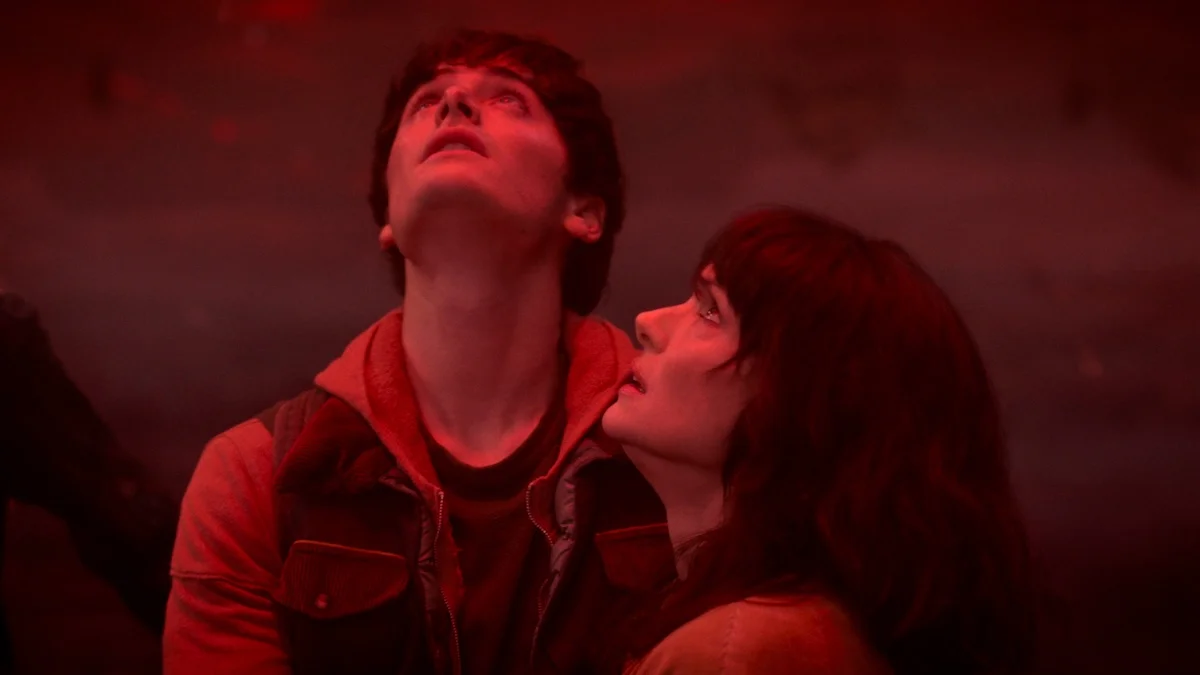
Predictable. Underwhelming. Maybe even a little cruel to its most beloved figure.
Those are some of the charges already being leveled at the finale of Stranger Things, the most culturally dominant series Netflix has ever produced.
They’re not the words I’d choose. What I saw instead was a conclusion that stayed true to its themes, honored its characters with rare consistency, and remained genuinely absorbing even if the last major adrenaline spike came a good forty minutes before the final, two-hour chapter wrapped itself up. The Duffer brothers brought their long, strange saga to a landing that feels earned, if not universally pleasing, and managed the tricky feat of leaving just enough ambiguity and emotional residue for the millions who care enough to argue about it endlessly. In today’s fractured pop landscape, that alone feels like a small miracle. And let’s be honest: the creators almost certainly knew the dissection would come. For a show like this, nitpicking is part of the afterlife.
Still, it’s important not to mistake fallen leaves for a dead forest. What began as a spooky, Spielberg-inflected kids-on-bikes thriller gradually expanded into a full-blown coming-of-age epic. Will (Noah Schnapp), Dustin (Gaten Matarazzo), Lucas (Caleb McLaughlin), and Mike (Finn Wolfhard) once wide-eyed nerds with slingshots and dice grew emotionally and philosophically at almost the same speed their actors aged into adulthood. By the final moments, when the boys and Max (Sadie Sink) instinctively retreat to the familiar rituals of Dungeons & Dragons as the future presses in, the Duffers transform what could look like regression into something deeper: a quiet act of faith. It’s the kind you cling to after you’ve known loss, not innocence. And when the camera lingers on Mike and his younger sister Holly (played by Season 5 standout Nell Fisher), closing one book while opening another, it’s hard not to feel the echo of real life. Childhood ends. Someone else picks up the story.
For all the spectacle the carefully cross-cut, visually lush defeat of Vecna (Jamie Campbell Bower), the communal destruction of the Mind Flayer, the narrow escape from interdimensional annihilation the true emotional fulcrum of this ending is Eleven. The Duffers have long resisted killing off central characters, and sacrificing Millie Bobby Brown’s telekinetic survivor would have been both the most obvious and the most devastating choice. After all she’s endured, after how much the series has asked of her, is this really the tribute she deserves?
Yet her decision to return to the Upside Down and bring its corruption to an end also completes a long, painful arc. This is the final evolution of a child who once barely understood language or love. If Mike’s grieving monologue near the end softens the blow perhaps too much the show carefully frames it as conjecture, a story told to survive the loss. You might argue about the execution, but there’s something admirable about writers determined to serve multiple emotional truths at once. They know how to bake a cake most of the audience can stomach, even if the recipe isn’t perfect.
Titled “The Rightside Up,” the finale also performs some impressive sleight of hand with tropes that had grown weary over five seasons. The familiar ingredients dark sorcery, dubious science, plans that collapse, side quests that lead nowhere, constantly shifting team configurations are all reinvigorated with a sense of urgency that feels genuinely final. Revelations land with satisfying weight: Nancy (Natalia Dyer), now fully in turbo-warrior mode, and Mike rescuing Holly; Joyce (Winona Ryder) confronting and literally beheading the monster who stole her son; Hopper (David Harbour) finally making peace with his long history of failed fatherhood. One of the finale’s central tasks was to justify the often-controversial groundwork laid in Season 5, Volume 2. And yes, people will complain about Chapter 8. They always do. Every batch of episodes seemed to give viewers something new to resent.
I understand why. Volume 2 was bloated with exposition, prone to repetition, crowded its frames with too many faces, expanded its nightmare dimensions perhaps too eagerly, and occasionally leaned on murky effects. There were romantic letdowns, earnest coming-out speeches that felt written by straight men, and if you’re inclined toward bad faith outrage that queerness was acknowledged at all in a show that has always sided with the ostracized. Take your pick; those episodes offered plenty of irritants.
And yet, despite those flaws, Episodes 5 through 7 especially the last two were models of solid dramatic architecture. Nearly every major character experienced a genuine breakthrough, something that fortified them emotionally for the final confrontation. Will voiced his deepest fear aloud. Dustin’s grief-stricken collapse mended his bond with Steve (Joe Keery). Jonathan (Charlie Heaton) and Nancy delivered what might be the gentlest, most empowering breakup television has ever staged, complete with a gooey, sci-fi-inflected Titanic nod. Steve, astonishingly, had a good idea. Holly found her bravery. Max woke up. Robin (Maya Hawke) proved to Vickie (Amybeth McNulty) that silence wasn’t indifference. And on and on it went.
Yes, you can quibble. But these moments were emotionally attuned and narratively functional, which is harder to pull off than it looks. By introducing the most consequential new relationship call it 811 the Duffers cleverly sidestepped expectations about how a potential suicide pact between Eleven and her fellow lab survivor Kali/Eight (Linnea Berthelsen) might unfold, while quietly setting up the finale’s most consequential turn. That’s not accident. That’s craft.
Ultimately, whatever history decides about Stranger Things will hinge on the same thing that made it a phenomenon in the first place: viewers cared. Not just about the fate of the world, but about the people trying to save it. That level of attachment is rare in genre television, reserved for shows that reach the emotional strata of Star Trek or The X-Files. The Duffers’ influences were eclectic Stephen King’s intimate horror, Lovecraft’s cosmic dread, A Wrinkle in Time, D&D lore and yet the series became something distinct from all of them.
The avalanche of ’80s needle drops and references dozens, hundreds, maybe more turned the show into a nostalgia feast for Gen X and the Duffers’ fellow millennials, while somehow also captivating their parents and children. Despite the period trappings and the occasionally ridiculous hair, the series always felt present, alive. Some imagery this season the shaved heads and sterile corridors evoking modern torture prisons, Vecna’s indoctrinated children turning on a truth-teller felt ripped straight from contemporary headlines. And really, how often does a TV show resurrect a Kate Bush song so thoroughly it conquers the charts four decades later?
At its core, Stranger Things has always been about growth forged under pressure. The monsters were real, but so were the humiliations of young love, the terror of self-definition, the drudgery of mall jobs and the ache of being misunderstood. The show treated demogorgons and emotional vulnerability as equals. And the fact that Brown, Wolfhard, Schnapp, Matarazzo, and McLaughlin visibly aged out of their roles only deepened the effect. Few series if any have used the passage of real time so effectively, not just visually but emotionally, allowing characters to genuinely learn who they are and what they can accept.
Some viewers will still think it all looks ridiculous. That’s fine. Others will mourn the fate of a preferred ship above everything else. That’s fine too. It simply means the show reached you somewhere beyond passive consumption, far removed from Netflix’s usual churn-and-forget content strategy.
Stranger Things was something worth caring about. Knowing the difference between that and everything else, by the way, is one of the quieter lessons of growing up.
Stranger Things Parents Guide
Violence & Peril
This is the show at its darkest and most intense. The Upside Down is no longer just eerie; it’s openly hostile, grotesque, and occasionally nightmarish. Characters are hunted, injured, possessed, and killed. Some deaths are emotionally devastating, not just visually upsetting. There are prolonged sequences of terror, body horror, and psychological torment especially involving Vecna that may be too much for sensitive viewers or younger teens. While much of the violence is fantastical, it’s staged with enough realism and emotional weight that you can feel it linger.
Fear & Emotional Intensity
If earlier seasons balanced scares with adventure, this one tips more heavily toward dread. Characters experience trauma, grief, panic, and despair in ways that feel grounded and recognizable. The show spends time inside fear rather than rushing past it. For some kids, especially those navigating anxiety or loss, these moments may resonate deeply possibly too deeply without context or conversation.
Language & Substance Use
Strong language appears intermittently, mostly in moments of stress or conflict, but it’s not relentless. There is some depiction of substance use primarily alcohol with adult characters, and references to drug experimentation tied to the show’s darker institutional themes. None of this is glamorized, but it is present.
Sexuality & Relationships
Romantic relationships both straight and queer are treated with empathy and seriousness. There are conversations about identity, attraction, and emotional honesty that feel sincere, if occasionally awkward. Some viewers may object to the inclusion of LGBTQ+ themes, though they are handled gently and align with the show’s longstanding focus on outsiders and acceptance. There is no explicit sexual content, but emotional intimacy and breakups are central to the story.
Themes Parents Should Note
Perhaps more than anything, Stranger Things grapples with maturation: letting go of childhood, facing loss, accepting responsibility, and learning that love sometimes means sacrifice. These are heavy ideas, but they’re explored with care. The show doesn’t talk down to its audience, and that includes younger viewers it trusts them to sit with discomfort and complexity.
Overall Guidance
This season is best suited for older teens and adults. Younger viewers who may have enjoyed earlier seasons could find this one overwhelming, both emotionally and visually. Watching together or at least talking afterward can help contextualize the fear and unpack the themes.
Stranger Things is now streaming on Netflix.
