All That We Love – Finding Light After Loss
Ever lost a pet and suddenly felt like the walls of your home got quieter like a part of your daily rhythm disappeared? That small, aching silence is where All That We Love begins. Yen Tan’s latest film doesn’t rush to fill that silence; instead, it sits there with you, gently exploring what happens when the love we lose pushes us toward rediscovering the love that’s still here.
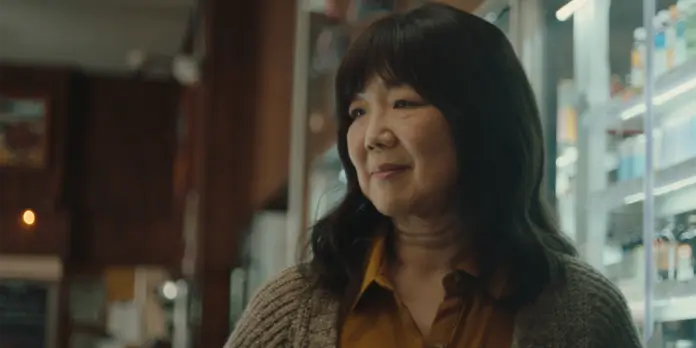
The film opens on Emma (Margaret Cho), who’s just said goodbye to her longtime dog, Tanner. Tan doesn’t soften the moment or fast-forward through the grief he lets it breathe. The camera lingers on Tanner’s empty bed, the untouched bowl of kibble, the paw prints still smudged on the back door. It’s quiet, still, and unbearably tender that kind of silence that says more than any tearful monologue ever could.
Recommended: Long Shadows Parents Guide
From there, we follow Emma as she tries, somewhat clumsily, to get back to life. She’s a woman in her fifties, caught between holding it together and letting herself fall apart. She still goes to work. She checks in on her daughter, Maggie (Alice Lee), who’s about to leave for Australia. And she spends time with her best friend, Stan (Jesse Tyler Ferguson), whose wry humor and gentle nudges give her moments of relief. But every night, Emma comes home to an empty house one where Tanner’s absence echoes through every routine.
Then Andy (Kenneth Choi), Emma’s ex-husband, reappears newly divorced, career on the rocks, and clearly hoping for some kind of emotional do-over. He’s the only one who truly understands what Tanner meant, but he’s also a living reminder of everything that went wrong in Emma’s past. Their reconnection isn’t romantic fireworks; it’s messy, nostalgic, and slightly uncomfortable the kind of awkward second chance that feels both right and wrong at the same time.
What’s beautiful about All That We Love is that it doesn’t treat grief as a one-note tragedy. Tan and co-writer Clay Liford turn it into something layered a meditation on time, memory, and the strange ways people stumble through healing. This isn’t a “get over it” story; it’s a “learn to live with it” story. And that makes all the difference.
Highly Recommended: Train Dreams (2025) Parents Guide
Margaret Cho usually known for her sharp comedic edge gives one of her quietest, most heartfelt performances here. She lets you see the exhaustion in Emma’s face, the moments when she’s almost okay, and the ones when she’s clearly not. Jesse Tyler Ferguson is an absolute gem as Stan that friend who’ll show up with wine and tough love when you need it most. And Kenneth Choi’s Andy feels human in all the right ways regretful, fragile, hopeful. None of them are written as clichés, which keeps the story grounded and deeply relatable.
Tonally, the film walks a delicate line between melancholy and warmth. It’s not afraid of stillness Tan’s direction is patient, even meditative. You can almost feel the air between scenes, the pause before a conversation starts. But there’s humor too gentle, awkward humor that sneaks up in the middle of heavy moments, reminding you that life doesn’t stop being weird or funny just because you’re grieving.
Visually, the film feels like a soft indie postcard muted colors, slow pacing, and a focus on the tiny, human details that most films rush past. The camera feels like a friend sitting quietly beside Emma rather than watching her from afar. That intimacy gives All That We Love its emotional pulse.
Now, it’s not perfect. The comedy side of this “dramedy” sometimes lands a little unevenly, and a few scenes wander in circles without saying much new. But those small flaws don’t overshadow the film’s beating heart its empathy. It’s a story that gently reminds you: everything you’ve loved still shapes who you are.
If you connected with films like The Farewell, Pieces of April, or 20th Century Women, this one will hit a similar emotional wavelength. It’s not loud, it’s not glossy it’s quietly profound, the kind of film that makes you want to call your mom or hug your dog a little tighter afterward.
In the end, All That We Love isn’t just about the death of a dog. It’s about the way love ripples through every version of our lives through the people we’ve lost, the relationships we’ve broken, and the ones we still have time to fix. It’s about realizing that the past doesn’t disappear when we move on; it becomes part of us, shaping every step forward.
And maybe that’s the point Yen Tan wants us to take home that grief doesn’t end. It just changes shape. It becomes memory, laughter, love, and eventually, acceptance.
Content Breakdown for Parents
Official Rating: No official MPAA rating OF All That We Love yet, but based on tone and content, it’s likely to receive a PG-13 for thematic material, mild language, and emotional intensity.
Violence & Intensity: There’s no physical violence, but the emotional tone is heavy. A few scenes deal with loss, death, and grief in a realistic way that might hit hard for younger or sensitive viewers.
Language: Mild profanity appears occasionally words like “damn” and “hell.” No strong language or slurs. The dialogue feels natural, not abrasive.
Sexual Content / Nudity: None. A few brief romantic references, but the story focuses more on family and friendship than romance.
Drugs, Alcohol & Smoking: Some social drinking at family gatherings and restaurants. No drug use or glamorization of alcohol.
Scary or Disturbing Scenes: The emotional weight of loss may be difficult for children who have experienced similar situations. One scene involves the pet’s passing, handled tastefully but realistically.
Parental Concerns: Parents should be aware that, despite its gentle tone, the film’s exploration of loss may bring up tough conversations about death and mourning. It’s deeply emotional but never manipulative.
Rating: 8/10 – For anyone who’s ever loved, lost, and learned to keep going anyway.
