Alpha is not rated because it has not undergone the official rating process by the Motion Picture Rating (MPA)
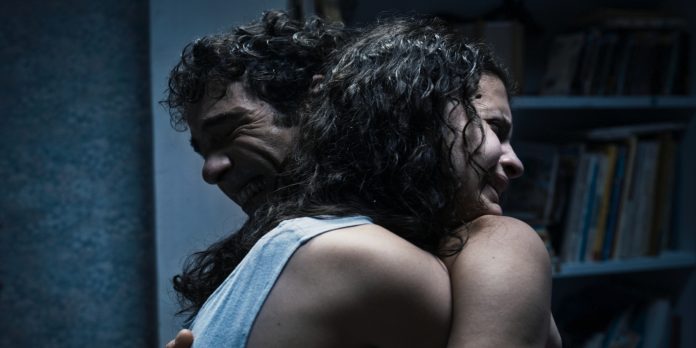
Alpha introduces us to a 13-year-old girl caught between innocence and the slow corrosion of a world that doesn’t seem to understand her. Alpha, played with raw, haunted energy by Mélissa Boros, lives alone with her mother. Their fragile routine implodes one afternoon when she returns home from school with a fresh tattoo a seemingly small act of rebellion that quickly mutates into something far more frightening.
Julia Ducournau has already carved out a place among the most distinctive modern filmmakers. Raw announced her as a fearless visionary; Titane confirmed it, earning her the Palme d’Or and cementing her as one of those rare directors whose every film feels like an event. That’s why Alpha arrives with such expectation and why its muted pulse feels oddly disheartening. It’s not that the film is bad, exactly; it’s that you can sense what it wants to be, and what it never quite becomes.
The premise is pure Ducournau: the body as battleground, transformation as metaphor. Alpha’s tattoo, her mother fears, might have exposed her to a deadly virus circulating through their community. On the surface, it’s a coming-of-age story with a body-horror glaze, but beneath that, Ducournau seems to be aiming for a parable about how society turns on the sick how fear infects compassion. The ambition is unmistakable. The execution, though, feels almost too direct, as if the film keeps underlining its own thesis rather than letting it breathe.
Highly Recommended: Die, My Love (2025) Parents Guide
The echoes of the AIDS crisis are impossible to miss. Those “infected” in Alpha slowly turn to marble a striking, mournful image while enduring the quiet cruelty of sidelong glances and whispered disgust. But the symbolism is heavy-handed, its meaning so literal it begins to dull the emotional edges. You can see what Ducournau is reaching for: an elegy for stigma, for the isolation of the ostracized. Yet the film’s commentary feels trapped in the past, reverent of its own metaphors rather than responsive to the present. It’s as if the film were carved, like its victims, into something too rigid to move us deeply.
Still, Alpha isn’t devoid of life. Family, as always in Ducournau’s work, forms the bruised heart of the film. The dynamic between Alpha, her mother, and her uncle Amin gives the story its rare moments of tenderness and tension. Tahar Rahim’s Amin a weary, magnetic drug addict whose compassion burns through his self-destruction all but steals the film. His performance is beautifully human, the kind that deserves a richer canvas. When he’s on screen, the film breathes; you can almost feel what Alpha might have been.
The relationship between Alpha and Amin carries a strange sweetness, a mixture of affection and resignation. Ducournau finds grace notes in their exchanges brief glimpses of real connection but they repeat, circling the same emotional ground until the poignancy wears thin. The film’s fragmented structure doesn’t help. Flashbacks arrive without warning or rhythm, and more often than not you find yourself disoriented, unsure where you are in the story. It’s the kind of confusion that alienates rather than intrigues.
Perhaps the film’s greatest missed opportunity is its confinement. Ducournau keeps the lens almost entirely within this fractured family unit. You wish, just once, she’d step outside their home and let us see how this strange virus reshapes the larger world how it refracts through neighbors, strangers, the collective fear. That wider scope might have given the film the texture it’s missing. Still, a few sequences linger. There’s a haunting moment in a school pool where Alpha’s blood clouds the water, and the classmates’ horror crystallizes into cruelty. It’s one of the few scenes where Ducournau’s old power her ability to shock not through gore but through human reaction briefly returns.
Also Read: Shelby Oaks (2024) Parents Guide
Visually, Alpha has its strengths. The marble effect that overtakes the infected is mesmerizing equal parts beautiful and tragic. But you can’t escape the sense that something vital has gone missing. The Ducournau who once stunned us with imagery both tender and grotesque now feels oddly restrained, as if afraid to go too far. The result isn’t restraint so much as inertia. Alpha looks polished, but it never jolts the senses or shakes the soul. For a filmmaker once synonymous with cinematic daring, that absence of danger feels almost like a betrayal.
Even the film’s muted color palette seems complicit a wash of greys and washed-out blues that mirror the emotional flatness beneath. It’s hard not to miss the tactile sensuality, the pulsing strangeness of her earlier films. By the time the credits roll, Alpha hasn’t offended or exhilarated; it’s simply faded. You sit there, searching for something to hold onto a feeling, a shock, a question and realize the film has already turned to marble in your mind.
Ducournau remains one of the most singular directors working today, but Alpha is a reminder that even visionaries stumble. The film has its moments Rahim’s aching performance, that unforgettable pool scene, flashes of visual poetry yet what lingers most is the hollow quiet it leaves behind. For a director once capable of cutting to the bone, this is a strangely bloodless work.
Detailed Content Breakdown for Parents
Violence & Intensity: There are scenes of illness that are disturbing: people turning into marble-white statues, decaying bodily states, hospital scenes with intense atmosphere. Although not necessarily graphic in the “guns and explosions” sense, the horror and bodily metamorphosis element can be quite intense for younger viewers.
Also, scenes of drug addiction (uncle character) and instability at home add to a sense of discomfort and heaviness rather than overt carnage.
Language: I found no reliable detailed breakdown of strong profanity or slurs. However, given the mature thematic content, it’s likely there is some strong language (perhaps in family/peer conflict) though not necessarily pervasive. Parents should be aware that the tone is serious, dark, and adult.
Sexual Content / Nudity: While the film doesn’t seem to emphasize sexual content in the sense of romance or explicit scenes, the setting includes a teenagers’ party, a tattoo performed by peers, drug scenes, and the uncle’s addiction. One mention in a user comment: “a sex scene involving condoms is still upsetting, in light of Alpha’s age.” So yes there appears to be at least a brief reference to sexual activity (possibly implied). Expect mild nudity or at least sexual themes, and parental caution advised.
Drugs, Alcohol & Smoking: Yes the uncle Amin is explicitly depicted as a heroin addict. There may also be scenes or references to substance use and its consequences. This is a significant element of the story.
Scary or Disturbing Scenes: The body-horror element (people turning into stone statues), the disease metaphor, the transformation, the fear of infection all these create a disturbing mood. Critics describe it as “body horror,” “dismal,” “oppressive.” Younger viewers or sensitive children could be unsettled by the visuals and mood.
Positive Messages / Role Models:
There are positive elements: Alpha’s mother is a working doctor a strong female role model dealing with crisis and trying to protect her child. Alpha is a teenager navigating fear and change, which can offer a mirror for kids dealing with uncertainties. Themes of resilience, family care, facing illness, acceptance and dealing with trauma appear to be present. The film asks tough questions about what happens when the body changes, when one is marginalized, when illness strikes so there is potential for deeper reflection.
Parental Concerns
- The mood is dark, heavy, and may be emotionally unsettling for younger or sensitive children.
- The body-horror / disease imagery may be disturbing. Statements like “turning into marble” statues are metaphorical, but the visuals reportedly evoke decay and petrification.
- Scenes involving drug use and addiction could be triggering or require context.
- Some sexual content (implied or actual) involving a young teenager, even if not explicit, may require discussion.
- Because the film is more art-house than mainstream family fare, it is less about comforting entertainment and more about challenging themes so children expecting a lighter story may be unprepared.
- Not yet widely rated in all regions; parents will need to use discretion and possibly preview.
