At least three times in the opening stretch of Euphoria‘s third season, one character or another looks up from whatever beautiful mess they’re in the middle of and admits: I miss high school. And the first time you hear it, you almost nod along. Of course they do. That’s what people say in their twenties when they’re lost and won’t admit it. It’s actually one of the more honest things Sam Levinson has ever written.
Then someone says it again. And again. And somewhere around the third time, you realize the line isn’t really about the characters at all. It’s the show talking. Euphoria misses high school. It hasn’t left.
Four years. That’s how long we’ve waited for this return. Four years in which Zendaya won two Emmys and became one of the most watched actors on the planet, in which Sydney Sweeney became a genuine cultural flashpoint, in which Jacob Elordi went from teen drama villain to the kind of slow-burn leading man Hollywood quietly panics over. Four years in which the world these characters once inhabited had every reason to feel smaller in the rearview. And yet here we are same people, same damage, new zip code. Hollywood now. Bigger houses. A wedding that several characters attend like it’s a form of self-harm. But underneath all the production value and the relocation, nothing has actually moved.
Highly Recommended: The Pitt Season 2 Parents Guide
Rue is still getting swallowed by the drug trade, still more resourceful than she is wise, still somehow surprised by how the game works after years of playing it. Cassie and Sweeney commits fully, she always does is still just trying to be seen, only now she has a fiancé and a social media grid and a mansion she hasn’t figured out how to feel at home in. Jules went to art school and came back the same. Maddy went to Hollywood and came back the same. Even Lexi who blew up her entire social world by staging an autobiographical play that aired every secret her friends had is back to orbiting someone else’s story, this time a Hollywood producer played by Sharon Stone, who at least has the good grace to seem like she knows exactly what kind of show she’s walked into.
The honest question isn’t whether these characters could still be stuck. They could. Trauma does that. Being twenty-something does that. There’s a real and unglamorous truth in the idea that whatever broke these kids at sixteen is still running their lives at twenty-three. That’s worth dramatizing. What’s harder to defend is the show’s insistence that none of them have met a single new person worth caring about. Four years on, their entire world is still each other. The same faces, the same unfinished grievances, the same bad decisions dressed up in better clothes. At some point, that stops feeling like character study and starts feeling like the writers’ room couldn’t figure out how to write anything else.
Nate is still having lunch with his father Cal the late Eric Dane, whose presence lands differently now, and not in a way the show seems to have fully reckoned with despite having handed him to the police. Rue and Jules find each other again and spend the reunion trying to decide whether they were ever actually good for one another. It’s a question the show has been circling for three seasons without any real intention of answering it.
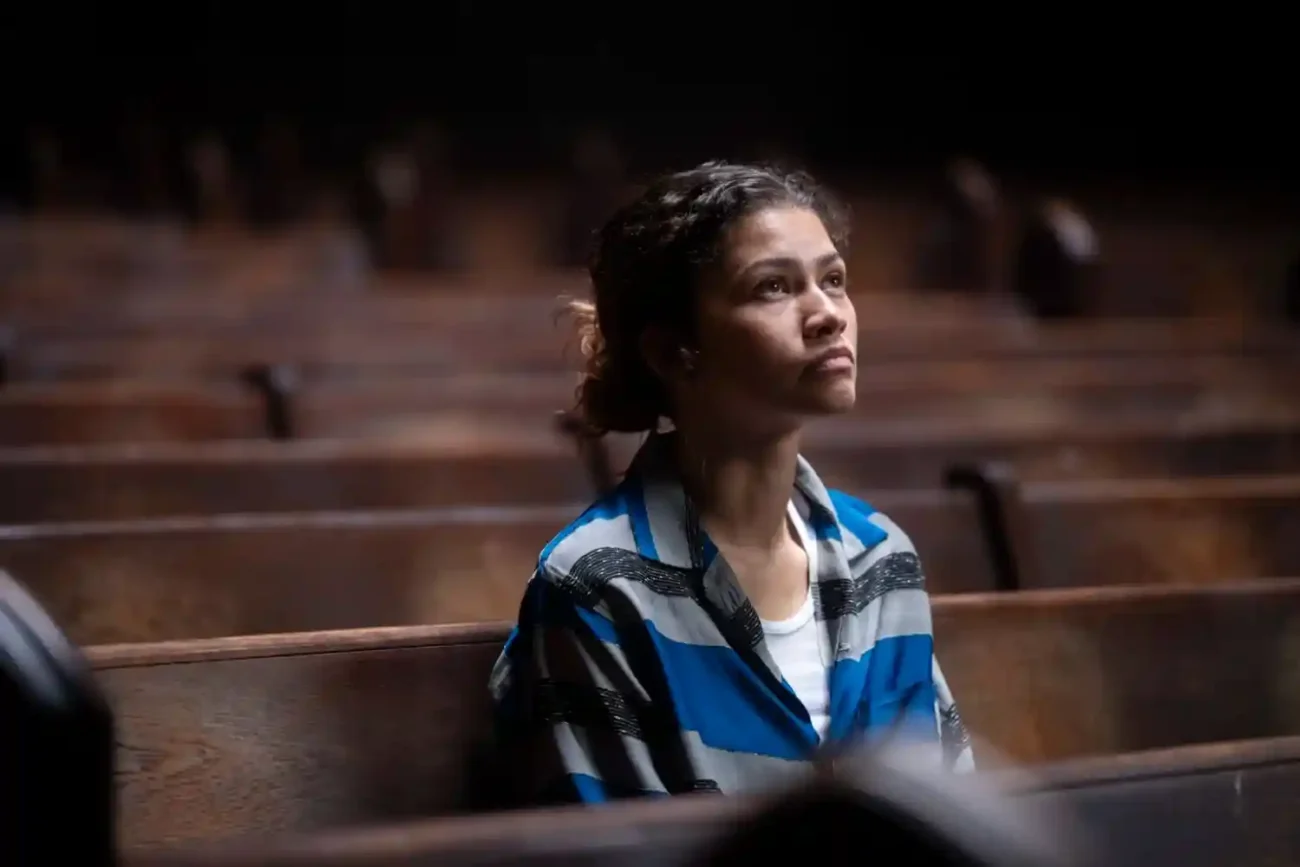
There are things here that genuinely work, and they work almost entirely because of the people doing them. Zendaya is, as she has been from the beginning, just there in a way that most actors aren’t. Watching Rue settle into the Silver Slipper a strip club run by Alamo, played with quiet menace by Adewale Akinnuoye-Agbaje there’s something almost peaceful about it that the show earns rather than imposes. Rue isn’t happy. But she’s found a strange, temporary shape to fill. She has a place under Alamo’s watch, a loose kind of purpose among his women, and a debt still hanging over her with Laurie, played by Martha Kelly in that unsettling, affectless register that makes every scene with her feel slightly dangerous. Zendaya understands something about Rue that the writing sometimes forgets: that drifting isn’t the same as giving up. Rue still believes she could take the wheel. She just keeps not doing it. That gap between believing and doing is where Zendaya lives, and it’s where the performance breathes.
Highly Recommended: Hijack Season 2 Parents Guide
The storyline that actually makes you lean forward, though, is Maddy’s. Alexa Demie has always been magnetic, but here she’s given something a little more specific to work with: a character who might, for the first time, want something for herself rather than in spite of someone else. There’s a scene where Maddy looks at a group of wide-eyed young women chasing an OnlyFans dream and actually sees them sees what they need, sees how she could help. It’s small, but it feels like the beginning of a real arc. And then, almost immediately, she invites Cassie back into her life for the ego hit of being the one standing taller. You feel the door close. Demie finds the sadness in that choice without underlining it, and it’s the most quietly devastating thing in these three episodes.
The frustrating part and it is genuinely frustrating, not in a dismissive way but in the way you feel when something capable of being great keeps choosing not to be is that Levinson has every tool he needs. He has a cast who showed up. He has a chance to let these characters carry their damage somewhere new, somewhere that makes the first two seasons feel like they were building toward something. Instead, he keeps reaching for the same aesthetic moves: the gorgeous misery, the slow-motion dissolution, the sense that looking beautiful while falling apart is its own kind of meaning. It was enough once. It’s harder to accept now.
Three episodes in three of eight there’s still time. The season might turn. Something might actually crack open and give all this repetition a reason to exist. But right now, watching Euphoria in 2026 feels a little like running into someone from high school who peaked there and wants to talk about it. You’re glad they’re okay. You’re just not sure why you came.
Euphoria Season 3 Parents Guide
Euphoria Season 3 is Rated TV-MA | HBO & Max
Violence & Intensity: Nobody gets shot in slow motion here and then the show moves on. The danger in Euphoria is the kind that builds quietly, Rue is crossing the US-Mexico border moving drugs, operating inside a world run by people who don’t make threats twice. The strip club scenes carry a real undercurrent of menace.
Language: F-words, slurs, crude sexual language, it moves through conversations the way background noise does, constant and unremarkable to the characters saying it. There are moments where slurs are directed at LGBTQ+ characters, and while the show isn’t endorsing that, it’s also not softening it. If your household has a real limit around language, this show will hit that limit before the opening credits finish.
Sexual Content & Nudity: This is probably the area where Euphoria is most uncompromising, and Season 3 doesn’t pull back. Nudity shows up in strip club settings, in scenes depicting sex work, and in sexual encounters that the camera doesn’t cut away from early. Jules’s storyline, her pattern of getting involved with older men who see her trans identity as something to consume rather than a person to know, is handled with honesty rather than sensationalism, but it is still graphic and uncomfortable in ways that are entirely intentional.
Drugs, Alcohol & Smoking: Rue is not just a character who uses drugs, she is now inside the machine that produces and moves them. Season 3 puts her on the supply side of addiction, and the show treats that without drama or moral punctuation. You watch it and feel how ordinary it all seems to her, which is exactly the point and also exactly the problem for younger viewers who might not catch the distinction between the show observing something and endorsing it. Alcohol flows freely throughout.
Age Recommendation: I strongly recommend for seventeen or eighteen-year-old could watch this, but not passively.
Euphoria Season 3 premieres Sunday on HBO and Max.
