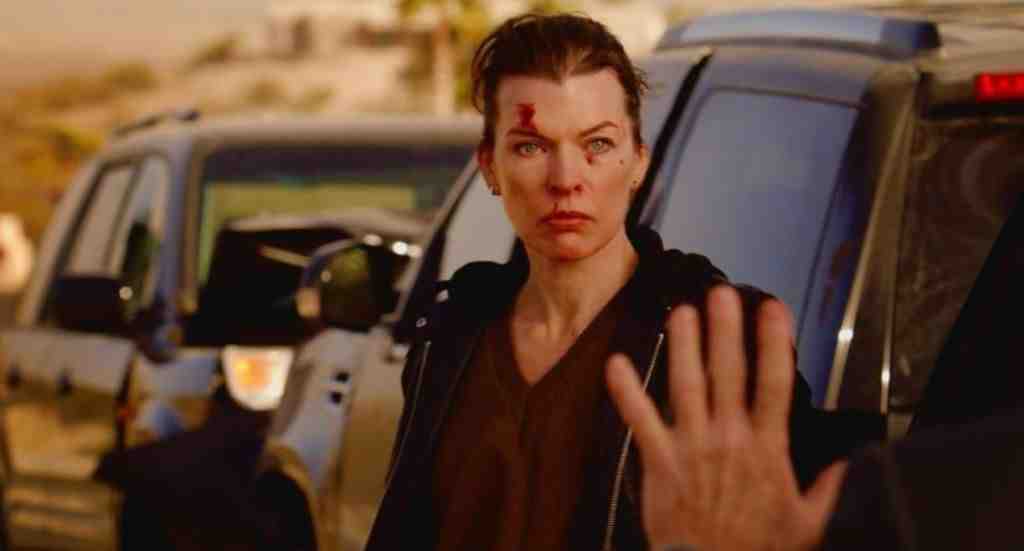
It’s never been especially easy to market a Milla Jovovich action vehicle that doesn’t carry the familiar branding of the Resident Evil series. That franchise turned Jovovich into one of modern genre cinema’s most reliable physical performers, but outside of it, audiences have grown oddly hesitant to follow her into new territory. In the past few years, films like In the Lost Lands, Breathe, and Monster Hunter have slipped quietly past the public’s attention. Her latest effort, Protector, unfortunately, feels destined for a similar fate at the box office. Yet the movie deserves a small measure of credit for the way it barrels forward without apology. It swings hard, even when it misses.
The screenplay by Bong-Seob Mun attempts to tweak the familiar “one-person army” formula with a slightly more mischievous angle, while director Adrian Grunberg, whose résumé includes the gritty Get the Gringo and the late-franchise brutality of Rambo: Last Blood, leans fully into his taste for savagery. Grunberg clearly enjoys staging punishment onscreen. His goal here seems to be a revenge story that hits like a hammer and celebrates Jovovich’s longstanding dedication to doing the physical work herself. The result is a film that often feels abrasive, occasionally exhilarating, and, in the end, almost unbelievably ridiculous. B-movies can thrive on absurdity sometimes, that’s the whole point, but in this case, the silliness tends to undercut whatever grit the film is reaching for.
Jovovich plays Nikki, a woman who has spent decades serving in the U.S. Army, shaping herself into a lethal instrument. Her narration describes her training in grimly poetic terms the “logistics of death,” she calls it as if she has devoted her entire existence to mastering the mechanics of violence. It’s the sort of life that doesn’t leave much room for motherhood. Nikki’s daughter, Chloe (Isabel Myers), was mostly raised by her father while Nikki remained deployed and distant.
When her husband dies, Nikki attempts to return to the role she neglected. But time, as these stories like to remind us, doesn’t rewind so easily. Chloe is now sixteen, a teenager impatient with parental authority and eager for independence. On her birthday, she sneaks out, joining friends at a local bar, an impulsive act that quickly turns dangerous. A charming stranger drugs her drink. Within moments, she’s being shoved into a car by human traffickers.
Highly Recommended: In the Blink of an Eye (2026) Parents Guide
By the time Nikki realizes what has happened, Chloe has vanished into the machinery of an organized crime network. Nikki believes she has roughly seventy-two hours before the trail goes cold. That ticking-clock premise launches the movie into motion, sending her after the criminal syndicate responsible for the abduction. The group, known as The Syndicate, is overseen by a shadowy figure called The Chairman, played with oily menace by Gabriel Sloyer. His operation centers on sex trafficking, which naturally places Nikki a former soldier trained to dismantle threats, on a collision course with his entire organization.
The movie wastes little time igniting the action. Nikki, fueled by a mixture of maternal panic and military instinct, charges after the car carrying her daughter. The pursuit sets the tone for everything that follows: metal crunching, bodies colliding, violence escalating by the minute. Grunberg seems determined to make every confrontation louder, harsher, and more punishing than the last. For long stretches, the movie becomes a blunt instrument of mayhem, Nikki crashing through rooms full of gunmen, clawing her way out of traps, surviving through sheer stubborn force.
And yet, curiously, Nikki also narrates the film from the sidelines, delivering reflective voice-over commentary that never quite finds a clear purpose. She tells us about her military past, about the guilt that comes from missing so much of her daughter’s childhood. These musings appear intended to deepen the character, but they mostly feel like explanations for emotions the movie hasn’t quite figured out how to dramatize on its own.
Once the hunt begins in earnest, the film plunges into Nikki’s relentless pursuit of The Syndicate. Her journey through their criminal infrastructure leaves behind a trail of wreckage and corpses. At one point, she literally chases down the kidnappers’ vehicle on foot, a moment that captures the film’s spirit of excess: this woman will break physics, logic, and probably several bones if it means catching the people who took her child.
For a while, the movie has a certain volatile energy. But that energy is constantly sabotaged by baffling narrative choices. The film introduces a seventy-two-hour countdown, only to casually skip over major developments. At one point, the story leaps forward to mention almost in passing that Nikki burned down a Syndicate brothel. It sounds like a spectacular set piece. Instead of showing it, the film simply informs us that it already happened. You can almost feel the missing scenes hovering in the air.
When we rejoin Nikki, she has been captured by the villains. Naturally, that doesn’t last long. The moment anyone threatens her, she responds with startling brutality. At several points, she removes the ears of her captors, an oddly specific punishment the film returns to more than once. Grunberg’s taste for cruelty is unmistakable. Sometimes that roughness works in the film’s favor; sometimes it feels like shock value in search of a narrative.
The movie occasionally embraces a gleeful kind of action-movie lunacy. In one fight, Nikki grabs a skateboard and uses it as part of a lethal maneuver to eliminate The Chairman’s top lieutenant. It’s the sort of scene that almost dares you not to laugh.
Meanwhile, the screenplay tries to complicate Nikki’s rampage by weaving in a handful of secondary characters. Hapless law enforcement officers, including one played by D.B. Sweeney, attempt to keep up with the chaos she’s leaving behind. The film also introduces Colonel Lavelle, played by Matthew Modine, a character who strongly recalls Colonel Trautman from the First Blood era of the Rambo mythology. Lavelle understands exactly what Nikki is capable of. His advice to everyone else is simple: stay out of her way.
The production itself clearly operates on a modest budget, and you can feel those constraints in the staging. Gunfights unfold in oddly chosen locations, sometimes seeming dictated more by what the filmmakers could afford than what the story required. Eventually, everything funnels toward a hotel that serves as The Syndicate’s final hideout.
Still, there are small character details that almost work. Nikki refuses to sleep, pushing herself deeper into exhaustion and paranoia. Her sleeplessness turns her into something feral, a soldier who barely resembles the mother she’s trying to be. The film even slips in the occasional tactical lesson, like Nikki explaining how to create a “kill box,” a combat maneuver that allows her to trap and eliminate waves of armed enemies.
But coherence is another matter. Much of “Protector” unfolds in ways that feel half-improvised. Dialogue often repeats the same bits of exposition, as if the movie fears viewers might miss a crucial detail if they blink.
Then comes the ending, which tries very hard to deliver a twist different from the straightforward revenge climax you expect. Simplicity would have served the story better. Instead, the film lunges toward a last-minute revelation that complicates Nikki’s mission and raises a cluster of new questions just as the credits are about to roll.
The intention, one suspects, is to leave the audience stunned, maybe even contemplative. But the more likely reaction is confusion, perhaps even irritation. After all the smashed bones and shattered windows, after all that furious determination, the film concludes not with clarity but with a strange narrative shrug.
And you can’t help wondering: if audiences do manage to find “Protector,” will they walk away impressed by its ferocity or simply baffled by the chaos it leaves behind?
Violence & Intensity: Violence is the driving force of Protector, and the movie rarely pauses long enough to soften its blows. The story follows a mother tearing through a criminal network to rescue her kidnapped daughter, and nearly every step of that journey involves brutal confrontations. Gunfights erupt frequently, with characters shot at close range and bodies dropping with alarming regularity. Hand-to-hand fights are harsh and personal—bones crunch, faces are smashed into walls, and the camera doesn’t always look away when the damage is done.
There are several moments of particularly graphic brutality. Nikki, the protagonist, is shown mutilating enemies during interrogations, including scenes where she cuts off ears to intimidate criminals for information. Blood is visible throughout many of the fights, and the tone of the violence is angry rather than playful. The film also deals with the disturbing subject of human trafficking, which adds a darker emotional layer to the action. Younger viewers may find the overall intensity overwhelming, as the film maintains a relentless pace of aggression from beginning to end.
Protector (2026) Parents Guide
Language: Strong language appears throughout the film and is used in a fairly casual, often heated way. Characters frequently shout profanities during fights, arguments, and moments of stress. Words like the f-word and other harsh insults appear repeatedly, particularly among criminals and law enforcement characters reacting to the chaos around them.
The tone of the dialogue tends to be aggressive and confrontational. While the language isn’t the film’s most shocking element, it is persistent enough that parents should expect frequent swearing in tense scenes.
Sexual Content / Nudity: There is no explicit nudity or graphic sexual activity shown onscreen, but the story revolves around a human trafficking ring involved in sexual exploitation. Some scenes take place in locations connected to that operation, including a brothel run by the criminal syndicate. The subject matter is implied rather than depicted in explicit detail, but the context is mature and potentially disturbing.
A scene early in the film shows a teenage girl being drugged by a man at a bar before she is abducted, which may be unsettling for younger viewers. The emphasis is on the crime rather than sexual imagery, but the themes themselves are serious.
Drugs, Alcohol & Smoking: Alcohol appears mainly in the early sequence set in a bar where teenagers are drinking and socializing. The most significant moment involves a drink being spiked to incapacitate a victim before her kidnapping. The scene reinforces the danger of the situation but still depicts substance use in a risky context.
Smoking is minimal, and drugs do not play a major role beyond the use of a sedative during the abduction. The focus remains on violence and the criminal underworld rather than substance abuse.
Age Recommendations: Because of its graphic violence, relentless intensity, strong language, and mature themes involving trafficking and abduction, Protector is best suited for older teens and adults. Most parents would likely find the material too disturbing for younger audiences.
A reasonable guideline would be ages 17 and up, particularly for viewers who are already familiar with gritty action films. Even then, the film’s brutality and dark subject matter may feel excessive for more sensitive viewers.
Highly Recommended:Union County 2026 Parents Guide
